Search


Monday, 30 January 2012

10 ways to control high blood pressure without medication

You don't always need prescription medications to lower your blood pressure. By making these 10 lifestyle changes, you can lower your blood pressure and reduce your risk of heart disease.

By Mayo Clinic staff

If you've been diagnosed with high blood pressure (a systolic pressure — the top number — of 140 or above or a diastolic pressure — the bottom number — of 90 or above), you might be worried about taking medication to bring your numbers down.
Lifestyle plays an important role in treating your high blood pressure. If you successfully control your blood pressure with a healthy lifestyle, you may avoid, delay or reduce the need for medication.
Here are 10 lifestyle changes you can make to lower your blood pressure and keep it down.

1. Lose extra pounds and watch your waistline

Blood pressure often increases as weight increases. Losing just 10 pounds can help reduce your blood pressure. In general, the more weight you lose, the lower your blood pressure. Losing weight also makes any blood pressure medications you're taking more effective. You and your doctor can determine your target weight and the best way to achieve it.
Besides shedding pounds, you should also keep an eye on your waistline. Carrying too much weight around your waist can put you at greater risk of high blood pressure. In general:
  • Men are at risk if their waist measurement is greater than 40 inches (102 centimeters, or cm).
  • Women are at risk if their waist measurement is greater than 35 inches (88 cm).
  • Asian men are at risk if their waist measurement is greater than 36 inches (90 cm).
  • Asian women are at risk if their waist measurement is greater than 32 inches (80 cm).

2. Exercise regularly

Regular physical activity — at least 30 to 60 minutes most days of the week — can lower your blood pressure by 4 to 9 millimeters of mercury (mm Hg). And it doesn't take long to see a difference. If you haven't been active, increasing your exercise level can lower your blood pressure within just a few weeks.
If you have prehypertension (systolic pressure between 120 and 139 or diastolic pressure between 80 and 89), exercise can help you avoid developing full-blown hypertension. If you already have hypertension, regular physical activity can bring your blood pressure down to safer levels.
Talk to your doctor about developing an exercise program. Your doctor can help determine whether you need any exercise restrictions. Even moderate activity for 10 minutes at a time, such as walking and light strength training, can help.
But avoid being a "weekend warrior." Trying to squeeze all your exercise in on the weekends to make up for weekday inactivity isn't a good strategy. Those sudden bursts of activity could actually be risky.

3. Eat a healthy diet

Eating a diet that is rich in whole grains, fruits, vegetables and low-fat dairy products and skimps on saturated fat and cholesterol can lower your blood pressure by up to 14 mm Hg. This eating plan is known as the Dietary Approaches to Stop Hypertension (DASH) diet.
It isn't easy to change your eating habits, but with these tips, you can adopt a healthy diet:
  • Keep a food diary. Writing down what you eat, even for just a week, can shed surprising light on your true eating habits. Monitor what you eat, how much, when and why.
  • Consider boosting potassium. Potassium can lessen the effects of sodium on blood pressure. The best source of potassium is food, such as fruits and vegetables, rather than supplements. Talk to your doctor about the potassium level that's best for you.
  • Be a smart shopper. Make a shopping list before heading to the supermarket to avoid picking up junk food. Read food labels when you shop, and stick to your healthy-eating plan when you're dining out, too.
  • Cut yourself some slack. Although the DASH diet is a lifelong eating guide, it doesn't mean you have to cut out all of the foods you love. It's OK to treat yourself occasionally to foods you wouldn't find on a DASH diet menu, like a candy bar or mashed potatoes with gravy.

4. Reduce sodium in your diet

Even a small reduction in the sodium in your diet can reduce blood pressure by 2 to 8 mm Hg. The recommendations for reducing sodium are:
  • Limit sodium to 2,300 milligrams (mg) a day or less.
  • A lower sodium level — 1,500 mg a day or less — is appropriate for people 51 years of age or older, and individuals of any age who are African-American or who have high blood pressure, diabetes or chronic kidney disease.
To decrease sodium in your diet, consider these tips:
  • Track how much salt is in your diet. Keep a food diary to estimate how much sodium is in what you eat and drink each day.
  • Read food labels. If possible, choose low-sodium alternatives of the foods and beverages you normally buy.
  • Eat fewer processed foods. Potato chips, frozen dinners, bacon and processed lunch meats are high in sodium.
  • Don't add salt. Just 1 level teaspoon of salt has 2,300 mg of sodium. Use herbs or spices, rather than salt, to add more flavor to your foods.
  • Ease into it. If you don't feel like you can drastically reduce the sodium in your diet suddenly, cut back gradually. Your palate will adjust over time.

5. Limit the amount of alcohol you drink

Alcohol can be both good and bad for your health. In small amounts, it can potentially lower your blood pressure by 2 to 4 mm Hg. But that protective effect is lost if you drink too much alcohol — generally more than one drink a day for women and more than two a day for men. Also, if you don't normally drink alcohol, you shouldn't start drinking as a way to lower your blood pressure. There's more potential harm than benefit to drinking alcohol.
If you drink more than moderate amounts of it, alcohol can actually raise blood pressure by several points. It can also reduce the effectiveness of high blood pressure medications.
  • Track your drinking patterns. Along with your food diary, keep an alcohol diary to track your true drinking patterns. One drink equals 12 ounces (355 milliliters, or mL) of beer, 5 ounces of wine (148 mL) or 1.5 ounces of 80-proof liquor (45 mL). If you're drinking more than the suggested amounts, cut back.
  • Consider tapering off. If you're a heavy drinker, suddenly eliminating all alcohol can actually trigger severe high blood pressure for several days. So when you stop drinking, do it with the supervision of your doctor or taper off slowly, over one to two weeks.
  • Don't binge. Binge drinking — having four or more drinks in a row — can cause large and sudden increases in blood pressure, in addition to other health problems.

6. Avoid tobacco products and secondhand smoke

On top of all the other dangers of smoking, the nicotine in tobacco products can raise your blood pressure by 10 mm Hg or more for up to an hour after you smoke. Smoking throughout the day means your blood pressure may remain constantly high.
You should also avoid secondhand smoke. Inhaling smoke from others also puts you at risk of health problems, including high blood pressure and heart disease.

7. Cut back on caffeine

The role caffeine plays in blood pressure is still debatable. Drinking caffeinated beverages can temporarily cause a spike in your blood pressure, but it's unclear whether the effect is temporary or long lasting.
To see if caffeine raises your blood pressure, check your pressure within 30 minutes of drinking a cup of coffee or another caffeinated beverage you regularly drink. If your blood pressure increases by five to 10 points, you may be sensitive to the blood pressure raising effects of caffeine.
Regardless of your sensitivity to caffeine's effects, doctors recommend you drink no more than 200 milligrams a day — about the amount in two cups of coffee.

8. Reduce your stress

Stress or anxiety can temporarily increase blood pressure. Take some time to think about what causes you to feel stressed, such as work, family, finances or illness. Once you know what's causing your stress, consider how you can eliminate or reduce stress.
If you can't eliminate all of your stressors, you can at least cope with them in a healthier way. Take breaks for deep-breathing exercises. Get a massage or take up yoga or meditation. If self-help doesn't work, seek out a professional for counseling.

9. Monitor your blood pressure at home and make regular doctor's appointments

If you have high blood pressure, you may need to monitor your blood pressure at home. Learning to self-monitor your blood pressure with an upper arm monitor can help motivate you. Talk to your doctor about home monitoring before getting started.
Regular visits to your doctor are also likely to become a part of your normal routine. These visits will help keep tabs on your blood pressure.
  • Have a primary care doctor. People who don't have a primary care doctor find it harder to control their blood pressure. If you can, visit the same health care facility or professional for all of your health care needs.
  • Visit your doctor regularly. If your blood pressure isn't well controlled, or if you have other medical problems, you might need to visit your doctor every month to review your treatment and make adjustments. If your blood pressure is under control, you might need to visit your doctor only every six to 12 months, depending on other conditions you might have.

10. Get support from family and friends

Supportive family and friends can help improve your health. They may encourage you to take care of yourself, drive you to the doctor's office or embark on an exercise program with you to keep your blood pressure low. Talk to your family and friends about the dangers of high blood pressure.
If you find you need support beyond your family and friends, consider joining a support group. This may put you in touch with people who can give you an emotional or morale boost and who can offer practical tips to cope with your condition.

Monday, 12 December 2011

Purpose of a letter e.g. letter of application

The purpose of a letter is TO REQUEST FOR AN INTERVIEW, but it is also a further opportunity to demonstrate your written communication skills to a prospective employer.

This is a SALES LETTER. The product you are selling is YOURSELF and your SKILLS. Like closing a sale, your letter should call for ACTION.

Source from 'Resumes for Results. A complete guide to preparing resumes and written applications, Di Inchley, The Business Library, 1992, ISBN 1 86350 100 2.

Capture Your Idea in 5 easy steps

How to capture an idea?

Taken from the book with the title "Writing Fast - How to write anything with lightning speed" by jeff bollow, here are the steps:

Capture Your Idea in 5 Easy Steps:
1. See what you've got
2. Look beyond the obvious
3. Brainstorm a new list of ideas.
4. Take it to its conclusion.
5. Write it down in one single sentence.

1. See what you've got.
You may already have your idea. If you do, don't complicate it. Skip to #5. But if it's not clear, crisp,original,compelling and interesting to you (honestly), then:

2. Look beyond the obvious.
Ask yourself what you're really trying to say. Is this thought leading somewhere else? Somewhere you're hesitant to go? Think about it. Then:

3. Brainstorm a new list of ideas.
Don't judge or think or steer. Create an enormous list of every possible approach to your idea. Take as much time as you need! Look yourself go. Scan the list, and look for the one that jumps out at you. Then:

4. Take it to its conclusion.
Don't settle for the first nuggets your brain gives you. Ask yourself what about this idea is compelling. Follow that train. Let the idea spark ideas, and lead you to the exact idea you want to express. You'll know it in your bones when you hit it. And then:

5. Write it down in one single sentence.
As clear and sharp as possible. Not a giant extended sentence that goes forever. One short, brief sentence that represents the essence of the idea you're trying to express.

Source : Jeff Bollow, 1st Ed, 2004, ISBN 0 9 752139 0 3

Saturday, 19 November 2011

Hypersonic bomb: One-hour delivery?


That is the title of the article which you can find at cnet.com. It mentioned that the U.S. Army has successfully tested a hypersonic aircraft that can travel five times the speed of sound and reach anywhere on Earth in less than an hour.

Described by the Pentagon as a 'glide vehicle, designed to fly within the earth's atmosphere at hypersonic speed and long range.

The weapon is part of Conventional Prompt Global Strike (CPGS), a program that would give the U.S. the power to strike anywhere in the world with conventional weapons.

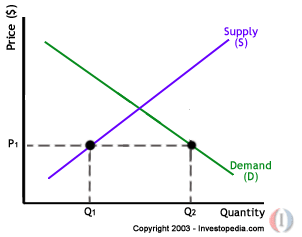
Demand and supply?

What is Demand? and What is Supply?

The following is the description from investopedia.com on demand and supply.

Supply and demand is perhaps one of the most fundamental concepts of economics and it is the backbone of a market economy. 


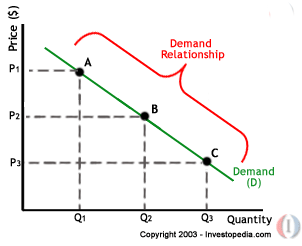
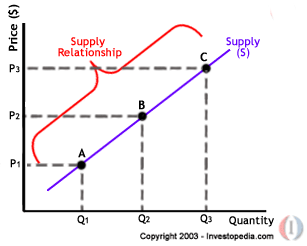
Demand refers to how much (quantity) of a product or service is desired by buyers. The quantity demanded is the amount of a product people are willing to buy at a certain price; the relationship between price and quantity demanded is known as the demand relationship. Supply represents how much the market can offer. The quantity supplied refers to the amount of a certain good producers are willing to supply when receiving a certain price. The correlation between price and how much of a good or service is supplied to the market is known as the supply relationship. Price, therefore, is a reflection of supply and demand.


Law of Demand:
Law of Supply:

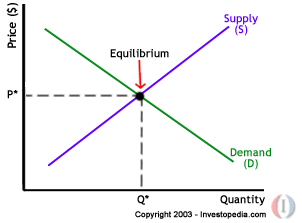
Equilibrium:


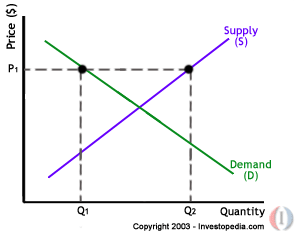
Disequilibrium: Excess supply


Disequilibrium: Excess Demand


Read more: http://www.investopedia.com/university/economics/economics3.asp#axzz1eABLC82m

Friday, 18 November 2011

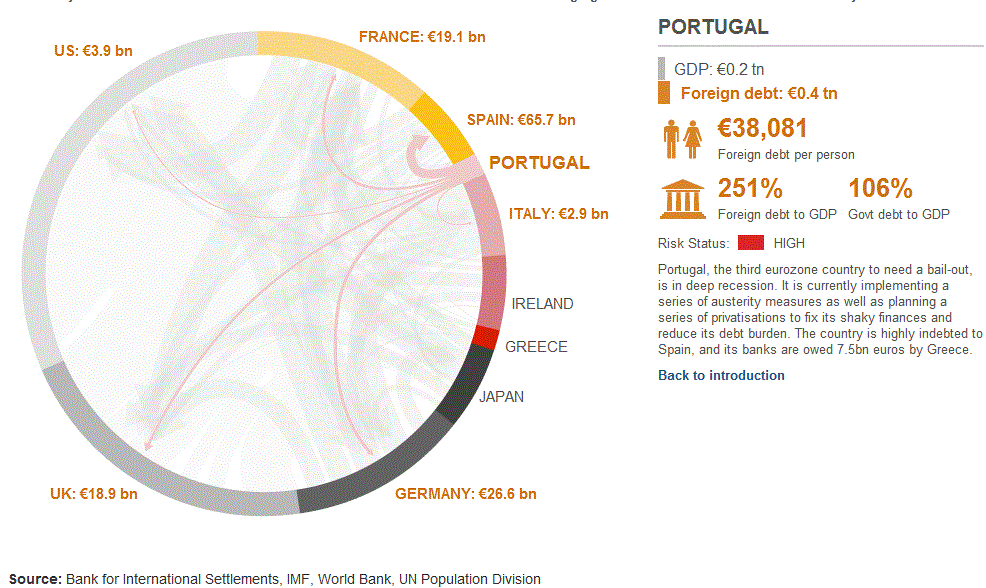
Eurozone debt web: Who owes what to whom?

Europe is struggling to find a way out of the eurozone crisis amid mounting debts, stalling growth and widespread market jitters. After Greece, Ireland, and Portugal were forced to seek bail-outs, Italy - approaching an unaffordable cost of borrowing - has been the latest focus of concern.

But, with global financial systems so interconnected, this is not just a eurozone problem and the repercussions extend beyond its borders.

While lending between nations presents little problem during boom years, when a country can no longer handle its debts, those overseas banks and financial institutions that lent it money are exposed to losses. This could not only unsettle the home country of those banks, but could, in turn, spread the troubles across the world.

So, in the tangled web of inter-country lending, who owes what to whom? Click on a country in the circle to find out what they owe to banks in other countries, as well to find out their total foreign debt, including that owed by governments, monetary authorities, banks and companies.

The circle below shows the gross external, or foreign, debt of some of the main players in the eurozone as well as other big world economies. The arrows show how much money is owed by each country to banks in other nations. The arrows point from the debtor to the creditor and are proportional to the money owed as of the end of June 2011. The colours attributed to countries are a rough guide to how much trouble each economy is in.


More details from the source at http://www.bbc.co.uk/news/business-15748696

Wednesday, 16 November 2011

Stanford's latest iPhone and iPad apps course now free to the world on iTunes U

BY SARAH JANE KELLER
Students may covet seats in Stanford's popular iPhone and iPad application development course, but you don't need to be in the classroom to take the course.

Anyone with app dreams can follow along online.

Paul Hegarty teaches students how to program applications for iPads and iPhones in a free online course that's the most popular download on Stanford's iTunes U site, with more than 10 million views.
Stanford has just released the iOS 5 incarnation of iPhone Application Development on iTunes U, where the public can download course lectures and slides for free. Some of the most talked-about features of Apple's latest operating system include iCloud, streamlined notifications and wireless syncing.
When Stanford's first iPhone apps course appeared online in 2009, it made iTunes history by rocketing to a million downloads in just seven weeks.
Alberto Martín is an engineer and independent iOS developer in Salamanca, Spain. He has been a diligent student of the online app development class since it first appeared.
He has created applications, now for sale in Apple's App Store, that organize your photos and make navigating while driving less distracting. Or, for fitness fans, an app that counts your pushups.
His apps provide him with extra income. "I hope some day I can live off this, because I love doing it," he said.
"Although it's not impossible, I think it's hard to make a lot of money in the App Store," Martín said. "But I think it's a beautiful process because it gives you the opportunity to develop your own ideas, sell them and fight for them."
Martín has been eagerly awaiting the release of the new course and says that he will follow the classes for as long as they keep coming.
"You learn a lot by watching the lectures on iTunes U," he said. "If you want to have success you need to keep on learning new things."
L.A. CiceroStudents check the results of their coding on their iPhones in the Developing Apps for iOS taught by Paul Hegarty
Students check the results of their coding on their iPhones in the Developing Apps for iOS taught by Paul Hegarty
Online learners hear the same lectures as classroom students, but do not get Stanford credit or access to instructors.
Instructor Paul Hegarty attributes the course popularity to the appeal of Apple products and the instant gratification of creating apps for mobile devices. "There's something about developing for the iOS platform that's really exciting and fun because it runs on devices that everybody has in their purses or pockets, " he said.
"There aren't a lot of courses you can take that when you get to the end, to your final project, you can take it out of your pocket and show your friends."
Hegarty said that his students develop a wide array of applications for the iPhone and iPad, including many that improve or automate their daily lives. Those include apps that manage laboratory experiments, keep track of food choices at campus eateries, or access the works of Shakespeare. Games and social networking applications are also popular.
John Cast, an electrical engineering student who is taking the class in a Stanford classroom, said that he learned about the course by watching earlier versions on iTunes U. Cast is working on applications that archive historical memorabilia and improve FM radio tuning.
"One of the coolest things about teaching this class is just seeing the creativity that gets applied," Hegarty said. "It's really quite amazing."
Developers unfamiliar with Apple's operating systems must learn a new programming language, Objective-C, if they hope to master the apps course. Stanford students take a year of computer science classes and learn the technique of object-oriented programming before tackling the iOS development class.
Two Stanford prerequisite courses, Programming Methodology and Programming Abstractions, are available on iTunes U.
Nikil Viswanathan, a computer science student, said that the class is "really, really, good" in large part because Hegarty doesn't just teach students a new language, he teaches the "philosophy of how we program in Objective-C" and "puts it into the context of entire computer science program."
Most introductory computer science classes are abstract, but Objective-C is used to build applications for mobile devices, so students learn the programming basics and apply them right away. "I don't think that what I'm doing is just teaching them programming," Hegarty said. "It's an opportunity to teach them some computing fundamentals in a real world environment."
Hegarty said he enjoys that so many people benefit from the work he puts into preparing the course. "You really feel like as an instructor that the work gets leveraged," he said. "It's really rewarding."
Sarah Jane Keller is a science-writing intern at the Stanford News Service
Media Contact
Dan Stober, Stanford News Service: (650) 721-6965, dstober@stanford.edu